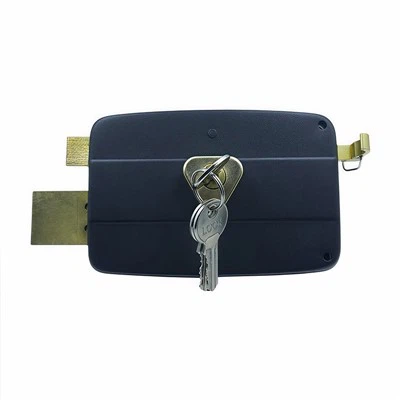
What is the torque required to turn a small cylinder lock?
As a supplier of small cylinder locks, I've received numerous inquiries about the torque required to turn these locks. Understanding this parameter is crucial, not only for lock manufacturers but also for end - users who want to ensure the smooth operation and security of their locks.
Understanding Torque
Torque is a measure of the force that can cause an object to rotate about an axis. In the context of a small cylinder lock, it refers to the amount of force needed to turn the key and, subsequently, the lock's internal components. Torque is calculated as the product of the force applied and the distance from the axis of rotation at which the force is applied. Mathematically, it is expressed as (T = F\times r), where (T) is the torque, (F) is the force, and (r) is the radius or the length of the key.
Factors Affecting the Torque Required
- Lock Design and Construction
The complexity of the lock's internal mechanism plays a significant role in determining the torque required. Locks with more intricate pin tumbler systems or additional security features such as sidebar mechanisms generally require more torque to turn. For example, a high - security small cylinder lock designed to resist picking and bumping will have a more complex arrangement of pins and springs. These components need to be precisely aligned for the lock to turn, and this often means that more force is needed to overcome the friction and resistance within the lock. - Key Design
The length and shape of the key also affect the torque. A longer key provides a greater lever arm ((r) in the torque formula), which means that less force ((F)) is required to achieve the same amount of torque. For instance, a small cylinder lock with a short, stubby key may require more finger strength to turn compared to one with a longer key. Additionally, the key's profile and the depth of its cuts can influence how well it engages with the lock's pins, and thus, the amount of torque needed. - Wear and Tear
Over time, locks experience wear. Dirt, dust, and debris can accumulate inside the lock cylinder, increasing the friction between the pins and the cylinder walls. Corrosion of the internal components can also occur, especially in environments with high humidity or exposure to chemicals. These factors can cause the lock to become stiffer, requiring more torque to turn. Regular maintenance, such as lubrication and cleaning, can help mitigate these effects and keep the torque requirements within an acceptable range. - Material Properties
The materials used in the lock's construction can impact the torque requirements. For example, locks made from high - quality brass or stainless steel may have smoother internal surfaces, reducing friction and thus requiring less torque. On the other hand, locks made from cheaper materials may have rougher surfaces or less precise manufacturing tolerances, leading to increased friction and higher torque needs.
Measuring the Torque
Measuring the torque required to turn a small cylinder lock typically involves using a torque wrench. A torque wrench is a tool that allows you to apply a specific amount of rotational force and measure it precisely. To measure the torque of a small cylinder lock, the lock is first securely mounted. Then, a key is inserted into the lock, and the torque wrench is attached to the key. The user then slowly applies force to turn the key until the lock begins to rotate, and the torque value at that point is recorded.


It's important to note that the acceptable torque range for small cylinder locks can vary depending on the application. For residential use, a lock that requires between 0.5 and 3 N·m (Newton - meters) of torque is generally considered acceptable. This range allows for easy operation by most people without being so low that the lock can be easily turned by accidental force. Commercial and high - security applications may have different requirements. For example, in a Hotel Locks setting, a slightly higher torque may be acceptable to ensure greater security.
Importance of Appropriate Torque
- User Experience
An appropriate torque is essential for a good user experience. If the torque required to turn the lock is too high, it can be frustrating for the user, especially for those with limited strength, such as the elderly or children. On the other hand, if the torque is too low, the lock may be easily turned by accidental contact or minor forces, compromising security. - Security
The torque required to turn a lock is also related to its security. A lock that requires a reasonable amount of torque is more difficult to pick or bump. Picking tools need to apply a certain amount of rotational force to manipulate the pins, and if the lock has a higher torque requirement, it becomes more challenging for an unauthorized person to open the lock using these methods.
Applications and Torque Requirements
- Residential Side Doors
For Side Door Lock in residential properties, a relatively low to moderate torque is preferred. Homeowners want a lock that is easy to operate, especially when they are carrying groceries or other items. A torque in the range of 0.5 - 2 N·m is usually sufficient. This allows for smooth and effortless operation while still providing an adequate level of security. - Sheds and Garages
Shed Door Locks may require a bit more torque. These locks are often exposed to the elements and may need to withstand more physical abuse. A torque in the range of 1 - 3 N·m can help ensure that the lock remains secure and is not easily forced open. However, it should still be manageable for the property owner to open and close the shed door without excessive effort. - Hotel Rooms
Hotel locks need to balance security and ease of use. Guests should be able to quickly and easily unlock their rooms, but at the same time, the locks must be resistant to unauthorized entry. A torque in the range of 1.5 - 3 N·m is common for Hotel Locks. This allows for a reasonable level of security while still providing a good user experience for guests.
Conclusion
As a small cylinder lock supplier, I understand the importance of providing locks with the appropriate torque requirements for different applications. We take great care in the design and manufacturing process to ensure that our locks offer a balance between security and ease of use. By considering factors such as lock design, key design, and the intended application, we can produce locks that meet the diverse needs of our customers.
If you are in the market for high - quality small cylinder locks, whether for residential, commercial, or industrial use, I encourage you to reach out to us. We can provide you with detailed information about the torque requirements of our various lock models and help you select the best lock for your specific needs. Contact us today to start a procurement discussion and find the perfect small cylinder lock solution for you.
References
- "Locksmithing: A Complete Guide" by Jay Higginbotham.
- "Security Locks and Their Selection" published by the American National Standards Institute.
- Research papers on lock technology and security from industry - leading journals.