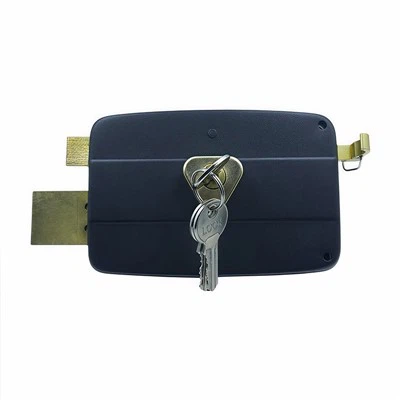
Hey there! As a Push Lock supplier, I often get asked about the noise insulation capabilities of our products. So, let's dive right in and explore what level of noise insulation a Push Lock can provide.
First off, let's understand the basics of how noise insulation works. Noise travels through the air in the form of sound waves. When these waves hit a barrier, like a door with a Push Lock, some of the energy is absorbed, some is reflected, and some passes through. The effectiveness of noise insulation depends on several factors, including the material of the lock, the design, and how well it seals the door.
Our Push Locks are made from high - quality materials. Most of them are crafted from solid metals, such as stainless steel or brass. These materials are dense, which means they are better at blocking sound waves compared to lighter materials. When sound waves hit the metal surface of the Push Lock, a significant amount of the energy is reflected back. This is because metals have a high acoustic impedance, which is a measure of how much a material resists the flow of sound energy.
The design of our Push Locks also plays a crucial role in noise insulation. A well - designed Push Lock fits snugly into the door and the door frame. This tight fit creates a seal that prevents sound from leaking through the gaps around the lock. For example, our locks have precision - engineered components that ensure a proper alignment when the door is closed. This reduces the chances of sound waves finding their way through small openings.
Let's talk about some real - world scenarios. In a busy office environment, there's a constant hum of conversations, the clatter of keyboards, and the occasional phone ringing. A door with a good Push Lock can significantly reduce the amount of noise that enters or leaves a private office. This is especially important for meeting rooms or areas where confidentiality is required. By installing our Push Locks, you can create a more peaceful and productive workspace.
In a residential setting, noise can be a major annoyance. Imagine living in an apartment building where you can hear your neighbors' footsteps, their TV, or their arguments. A Push Lock on your front door or bedroom door can act as a barrier against this unwanted noise. It can help you get a better night's sleep and enjoy a more quiet and relaxing home environment.
Now, let's compare our Push Lock with some other types of locks in terms of noise insulation. Take the Self Locking Door Lock. While it has its own advantages, such as convenience and security, in terms of noise insulation, our Push Lock might have an edge. The Push Lock's design allows for a more complete seal around the lock area, which can block more sound.
Another option is the Small Door Lock. These locks are often used for interior doors or small cabinets. However, they may not provide the same level of noise insulation as our Push Lock. The smaller size means there's less material to block the sound, and the seal might not be as tight.
But how do we measure the noise insulation of a Push Lock? One common way is to use the Sound Transmission Class (STC) rating. The STC rating measures how well a material or structure reduces sound transmission. A higher STC rating means better noise insulation. While there isn't a specific STC rating just for locks, the overall door and lock system can be rated. Our Push Locks, when installed on a well - constructed door, can contribute to a higher STC rating for the door.
It's important to note that the noise insulation provided by a Push Lock also depends on the quality of the door itself. A solid, well - insulated door will work better with a Push Lock to block noise. If you have a thin, hollow door, the Push Lock can still help, but the overall noise reduction might not be as significant.
In addition to the physical properties of the Push Lock, proper installation is key. If the lock is not installed correctly, it won't be able to provide the best noise insulation. Our team of experts can offer installation tips and guidance to ensure that your Push Lock is installed perfectly.
So, in conclusion, a Push Lock from our company can provide a decent level of noise insulation. Its high - quality materials, well - thought - out design, and tight fit all contribute to reducing the amount of noise that passes through the door. Whether you're looking to create a quiet workspace or a peaceful home, our Push Locks can be a great solution.


If you're interested in our Push Locks and want to learn more about their noise insulation capabilities or place an order, feel free to reach out. We're always happy to answer your questions and discuss your specific needs. You can check out our Push Lock product page for more details.
References
- Acoustics: Fundamentals and Applications by David C. Harris
- Building Acoustics by Colin H. Hansen and Malcolm J. Crocker