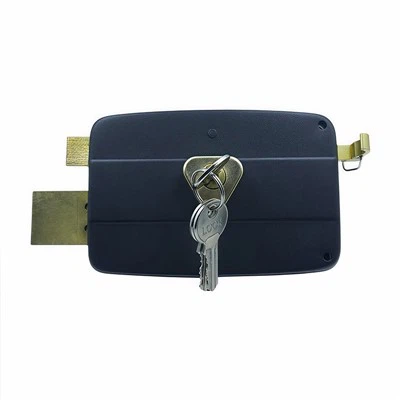
A privacy latch lock is a common yet essential hardware component used in various settings, offering a balance between security and convenience. As a supplier of privacy latch locks, I am often asked about how these locks work and what makes them a popular choice for many applications. In this blog post, I will delve into the mechanics of privacy latch locks, their features, and the scenarios where they are most useful.
Understanding the Basics of a Privacy Latch Lock
At its core, a privacy latch lock is designed to provide a degree of privacy without the need for a key in most cases. These locks are commonly found in bathrooms, bedrooms, and other areas where individuals may want to have a sense of seclusion. Unlike deadbolts or high - security locks, privacy latch locks are not primarily for preventing forced entry but rather for indicating that the room is occupied.
The basic structure of a privacy latch lock consists of a latch bolt, a strike plate, and an operating mechanism. The latch bolt is the part that extends from the door into the strike plate on the door frame, holding the door closed. The operating mechanism can be a thumbturn on the inside of the door and a push - button or a simple latch on the outside.
How the Latch Mechanism Works
The latch bolt is the key component of the locking mechanism. It is spring - loaded, which means it has a natural tendency to extend outwards. When the door is closed, the angled end of the latch bolt comes into contact with the strike plate on the door frame. As the door continues to close, the angled surface of the latch bolt is pushed inwards against the spring force. Once the latch bolt aligns with the opening in the strike plate, the spring force pushes it back out, locking the door in place.
On the inside of the door, there is usually a thumbturn. When you turn the thumbturn, it retracts the latch bolt. This allows the door to be opened from the inside. The thumbturn is connected to the latch bolt through a series of gears or levers, depending on the design of the lock.
On the outside, the operation can vary. In some privacy latch locks, there is a simple push - button. Pushing the button retracts the latch bolt, allowing the door to be opened. In other cases, especially in more secure privacy latch locks, there may be a small hole on the outside. A small tool, such as a paperclip, can be inserted into this hole to retract the latch bolt. This is useful in case someone is locked inside the room and needs assistance.


Features of Privacy Latch Locks
One of the main features of privacy latch locks is their ease of use. They are designed to be operated quickly and effortlessly, making them suitable for everyday use. For example, in a bathroom, you can easily lock the door with a simple turn of the thumbturn when you need privacy.
Another feature is their versatility. Privacy latch locks come in a variety of styles and finishes to match different door designs and interior decors. Whether you have a modern, minimalist door or a traditional, ornate one, there is likely a privacy latch lock that will fit your aesthetic needs.
In terms of security, while privacy latch locks are not as strong as high - security locks, they still provide a certain level of protection. They can prevent casual entry, such as someone accidentally opening the door while you are in the room. However, they are not designed to withstand forced entry attempts.
Scenarios Where Privacy Latch Locks are Useful
Privacy latch locks are most commonly used in residential settings. In bathrooms, they are essential for providing privacy while someone is using the facilities. In bedrooms, they allow individuals to have a private space, especially when they are sleeping or changing clothes.
In addition to residential use, privacy latch locks can also be used in some commercial settings. For example, in small offices or meeting rooms, a privacy latch lock can be used to indicate that the room is currently occupied. This helps to respect the privacy of the people inside the room.
Comparing with Other Types of Locks
When compared to other types of locks, such as deadbolts or padlocks, privacy latch locks have their own advantages and disadvantages. Deadbolts are much more secure and are designed to prevent forced entry. They are commonly used on exterior doors for home security. However, deadbolts require a key to operate, which can be inconvenient in some situations.
Padlocks are portable and can be used on a variety of objects, such as gates and storage containers. They are also relatively easy to install and remove. However, they are not as integrated into the door as privacy latch locks and may not be suitable for providing privacy in a room.
On the other hand, if you are looking for a lock for a storeroom, you might consider a Storeroom Lock. These locks are designed to provide a higher level of security for storage areas. For sheds, a Shed Lock is a great option, as it can withstand outdoor conditions. And for doors with a round shape or a specific aesthetic requirement, a Round Door Lock can be a perfect fit.
Our Offerings as a Privacy Latch Lock Supplier
As a supplier of privacy latch locks, we offer a wide range of products to meet the diverse needs of our customers. Our locks are made from high - quality materials, ensuring durability and long - term performance. We have different styles and finishes available, so you can choose the one that best matches your door and interior design.
Our team of experts is always ready to provide you with professional advice on which privacy latch lock is most suitable for your specific application. Whether you are a homeowner looking to upgrade the locks in your bathroom or a commercial property owner in need of locks for your offices, we can help you make the right choice.
Contact Us for Procurement
If you are interested in purchasing privacy latch locks or have any questions about our products, we encourage you to contact us. We are committed to providing excellent customer service and ensuring that you get the best locks for your needs. Our team will be happy to discuss your requirements, provide you with a quote, and assist you throughout the procurement process.
References
- "Handbook of Locksmithing" - A comprehensive guide on different types of locks and their mechanisms.
- Industry standards and guidelines for door locks and hardware.