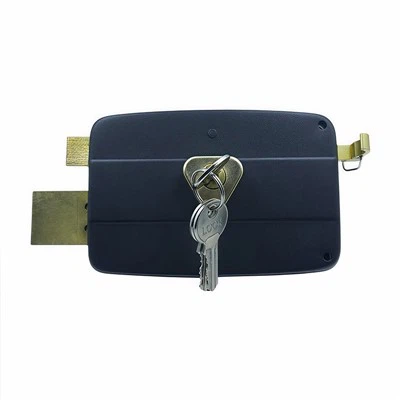
Child - proof round door locks are an essential safety feature in many households, especially those with young children. As a supplier of Round Door Lock, I've had the opportunity to learn in - depth about how these locks work and why they are so effective in preventing children from accessing potentially dangerous areas.
The Basic Design of Child - Proof Round Door Locks
Child - proof round door locks are typically designed with a simple yet effective mechanism. They are usually installed on the top of the door, out of the reach of small children. The round shape of these locks is not just for aesthetics; it also plays a role in their functionality. The smooth, circular design makes it easier to install and ensures that there are no sharp edges that could pose a safety hazard.
Most child - proof round door locks consist of two main parts: a base unit that is attached to the door frame and a locking mechanism that is attached to the door itself. When the door is closed, the locking mechanism on the door aligns with the base unit on the frame, allowing the lock to be engaged.
The Locking Mechanism
The locking mechanism of a child - proof round door lock is designed to be difficult for children to operate but easy for adults. There are several types of locking mechanisms commonly used in these locks:
Push - Button Locks
Push - button locks are one of the most common types of child - proof round door locks. These locks have a small button that needs to be pushed in order to unlock the door. The button is often recessed or requires a certain amount of pressure to be pushed, making it difficult for small children to press. Adults can easily reach the button and press it to unlock the door.
Sliding Locks
Sliding locks work by sliding a small bar or tab to unlock the door. The movement required to slide the lock is usually more complex than a simple push, which makes it challenging for children. Adults can use their dexterity to slide the lock open quickly.
Twist - and - Turn Locks
Twist - and - turn locks require the user to twist a knob or a key - like mechanism to unlock the door. The twisting motion is not intuitive for young children, who may not have the strength or coordination to turn the lock. Adults, on the other hand, can easily grip and turn the lock to gain access.
How They Prevent Children from Opening Doors
The main principle behind child - proof round door locks is to create a barrier that is difficult for children to overcome. Children typically have limited strength, coordination, and problem - solving skills. The locking mechanisms of these locks are designed to take advantage of these limitations.
For example, the height at which the locks are installed is a crucial factor. By placing the lock out of the reach of children, it becomes almost impossible for them to even attempt to operate it. Additionally, the complex motions required to unlock the door, such as pushing a recessed button, sliding a bar, or twisting a knob, are beyond the capabilities of most young children.
Installation of Child - Proof Round Door Locks
Installing a child - proof round door lock is a relatively straightforward process. Most locks come with detailed installation instructions and all the necessary hardware.
First, you need to choose the right location for the lock. As mentioned earlier, it should be installed at a height that is out of reach of children. Usually, this means installing the lock near the top of the door.
Next, you need to mark the positions for the base unit and the locking mechanism on the door frame and the door respectively. Use a drill to make holes for the screws and then attach the base unit and the locking mechanism using the provided screws. Make sure that the lock is properly aligned so that it can be easily engaged and disengaged.
Comparison with Other Types of Door Locks
While child - proof round door locks are specifically designed for child safety, there are other types of door locks available in the market, such as Side Door Lock and Hotel Locks.
Side door locks are often more focused on security for the home. They are usually installed on the side of the door and may use different locking mechanisms, such as deadbolts. These locks are not typically designed with child - proofing in mind and may be easier for children to operate.
Hotel locks, on the other hand, are designed for commercial use. They often use electronic or key - card systems for access control. While these locks can be very secure, they are not suitable for child - proofing in a home environment.
Benefits of Choosing Child - Proof Round Door Locks
There are several benefits to choosing child - proof round door locks for your home:
Safety
The most obvious benefit is the safety of your children. These locks can prevent children from accessing areas such as kitchens, bathrooms with cleaning supplies, or rooms with electrical equipment.
Ease of Use for Adults
Despite being child - proof, these locks are easy for adults to operate. You don't have to struggle every time you want to open or close the door.
Aesthetics
The round design of these locks can add a touch of style to your doors. They are available in a variety of finishes and colors, allowing you to choose a lock that matches your home decor.
Conclusion
Child - proof round door locks are an effective and practical solution for keeping your children safe. Their unique design and locking mechanisms make them difficult for children to operate while being easy for adults. As a supplier of Round Door Lock, I am confident in the quality and functionality of our products.
If you are interested in enhancing the safety of your home with our child - proof round door locks, we welcome you to contact us for more information and to discuss your procurement needs. We can provide you with detailed product specifications, pricing, and any other information you may require.


References
- American Academy of Pediatrics. (2023). Home safety for young children.
- Consumer Reports. (2022). Door locks and security features.