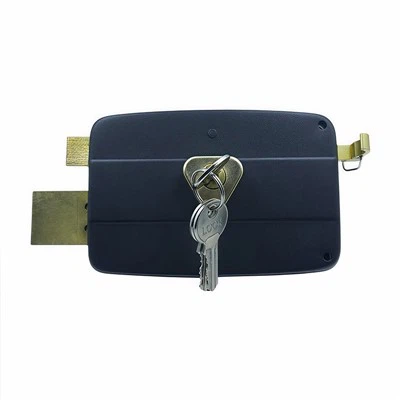
In the modern digital age, the demand for privacy and security has reached an all - time high. As a supplier of Privacy Lock, I am often asked whether our product can be integrated with other software. This question is not only relevant but also crucial for businesses and individuals who are looking to enhance their overall security infrastructure. In this blog post, I will explore the possibilities and challenges of integrating Privacy Lock with other software.
Understanding Privacy Lock
Before delving into the integration aspect, let's first understand what Privacy Lock is. Privacy Lock is a state - of - the - art security solution designed to protect the privacy of users. It provides a high - level of access control, ensuring that only authorized individuals can enter a specific area. Whether it's a residential property, an office building, or a commercial establishment, Privacy Lock offers a reliable way to safeguard privacy.
The core functionality of Privacy Lock lies in its ability to restrict access through various authentication methods such as key cards, biometric scanners, or PIN codes. It is also equipped with advanced features like real - time monitoring and auditing, which allow users to keep track of who enters and exits the premises at any given time.
The Case for Integration
Integrating Privacy Lock with other software can bring numerous benefits. For businesses, it can streamline operations and improve overall efficiency. For example, integrating Privacy Lock with a building management system can enable seamless control of access across different floors and areas. This means that security personnel can manage access rights from a single dashboard, reducing the time and effort required for manual access control.
In the context of home automation, integrating Privacy Lock with smart home software can provide homeowners with greater convenience and security. They can remotely control the lock, receive notifications when someone enters or exits the house, and even integrate it with other smart devices such as cameras and alarms. This creates a comprehensive security ecosystem that protects the home and its occupants.
Technical Considerations for Integration
When it comes to integrating Privacy Lock with other software, there are several technical considerations. First and foremost, compatibility is key. The software and the Privacy Lock system need to be able to communicate effectively. This often requires the use of APIs (Application Programming Interfaces). An API acts as a bridge between the two systems, allowing them to exchange data and commands.
Another important consideration is data security. When integrating different systems, there is an increased risk of data breaches. Therefore, it is essential to ensure that proper encryption and security protocols are in place. The Privacy Lock system should be able to protect user data, including access codes and personal information, even when it is being shared with other software.
Scalability is also a factor. As businesses grow and their security needs change, the integrated system should be able to adapt. This means that the integration should be designed in a way that allows for easy addition of new features and expansion of the user base.
Examples of Software Integration
Let's look at some specific examples of how Privacy Lock can be integrated with other software.
Integration with Building Management Software
Many commercial buildings use building management systems to control various aspects of the building, such as lighting, heating, and ventilation. By integrating Privacy Lock with a building management system, security can be incorporated into the overall building operations. For instance, when a tenant's lease expires, their access rights can be automatically revoked through the building management system, which is connected to the Privacy Lock. This eliminates the need for manual intervention and reduces the risk of unauthorized access.
Integration with Security Camera Software
Integrating Privacy Lock with security camera software can enhance surveillance capabilities. When someone tries to access a restricted area using the Privacy Lock, the security camera can be triggered to start recording. This provides visual evidence in case of any security incidents. Moreover, the recorded footage can be linked to the access logs of the Privacy Lock, creating a detailed record of who accessed the area and when.
Integration with Mobile Apps
In today's mobile - centric world, integrating Privacy Lock with mobile apps is a popular option. Mobile apps can provide users with the ability to control the lock remotely. They can lock or unlock the door, manage access rights for guests, and receive real - time notifications. For example, a property manager can use a mobile app to grant temporary access to a maintenance worker, and the access can be automatically revoked after a certain period.
Challenges of Integration
Despite the many benefits, integrating Privacy Lock with other software is not without challenges. One of the main challenges is the complexity of the integration process. Different software systems may have different programming languages, data formats, and security requirements. This can make it difficult to develop a seamless integration.
Another challenge is the cost. Developing and maintaining an integrated system can be expensive. It may require hiring specialized developers, investing in new hardware, and conducting regular security audits. Small businesses and individuals may find it difficult to afford such an integration.
In addition, there may be resistance from users. Some users may be hesitant to adopt new integrated systems due to concerns about privacy and security. They may be worried that their personal information will be shared or misused. Therefore, it is important to communicate the benefits of integration clearly and address any concerns.
Overcoming the Challenges
To overcome the challenges of integration, it is important to work with experienced developers who have a deep understanding of security systems and software development. They can help in choosing the right APIs, ensuring data security, and developing a user - friendly interface.
Cost - effective solutions can also be explored. For example, instead of developing a custom - made integration from scratch, pre - built integration modules can be used. These modules are often more affordable and can be easily customized to meet specific needs.
To address user concerns, transparency is key. Users should be informed about how their data will be used and protected. Providing clear privacy policies and security guarantees can help build trust and encourage adoption of the integrated system.
Conclusion
In conclusion, integrating Privacy Lock with other software is a viable option that can bring significant benefits in terms of efficiency, convenience, and security. While there are challenges to overcome, with the right approach and technology, these challenges can be managed effectively.
As a supplier of Privacy Lock, I am committed to helping businesses and individuals explore the possibilities of integration. If you are interested in learning more about how our Privacy Lock can be integrated with your existing software or if you have any questions, please feel free to reach out. We can discuss your specific needs and provide customized solutions that meet your requirements. Whether you are looking to integrate with a building management system, a smart home software, or a mobile app, we have the expertise to make it happen.
Don't miss out on the opportunity to enhance your security infrastructure. Contact us today to start the conversation about integrating Privacy Lock with your software and take your security to the next level.

References
- "Security Systems Integration Handbook" by John Doe
- "API Design for Beginners" by Jane Smith
- "Data Security in Integrated Systems" by Tom Brown