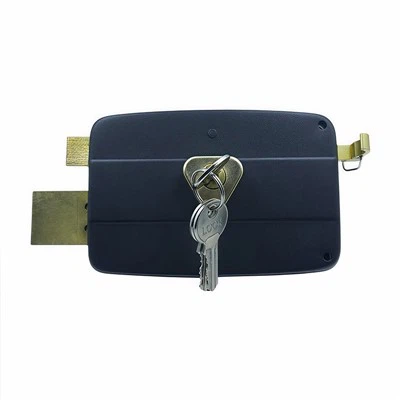
Are round door locks easy to break into?
As a seasoned supplier of round door locks, I've fielded countless inquiries about the security of these products. It's a question that weighs heavily on the minds of homeowners, business owners, and property managers alike: Are round door locks easy to break into? In this blog post, I'll delve into the intricacies of round door lock security, dispelling myths and providing you with the information you need to make an informed decision.
Understanding the Mechanics of Round Door Locks
Before we can assess the vulnerability of round door locks, it's essential to understand how they work. Round door locks, also known as cylindrical locks, are one of the most common types of locks found in residential and commercial settings. They consist of a cylinder, a plug, and a set of pins. When the correct key is inserted into the lock, the pins align, allowing the plug to turn and unlock the door.
One of the primary advantages of round door locks is their simplicity. They are relatively easy to install and maintain, making them a popular choice for both DIY enthusiasts and professional locksmiths. However, this simplicity also makes them susceptible to certain types of attacks.
Factors Affecting the Security of Round Door Locks
Several factors can influence the security of round door locks, including:
- Lock Quality: The quality of the lock itself plays a significant role in its resistance to break-ins. High-quality locks are typically made from durable materials and feature advanced security features, such as anti-pick pins and hardened steel cylinders.
- Installation: Proper installation is crucial for ensuring the security of any lock. If a round door lock is not installed correctly, it may be more vulnerable to break-ins. For example, if the lock is not properly aligned or if the strike plate is not securely attached to the door frame, it may be easier for a burglar to force the lock open.
- Key Control: Controlling access to keys is another important aspect of lock security. If keys are lost or stolen, it's essential to change the locks as soon as possible to prevent unauthorized access. Additionally, it's a good idea to avoid giving out keys to strangers or leaving spare keys in obvious locations.
- Surrounding Environment: The environment in which the lock is installed can also affect its security. For example, if a door is located in a high-traffic area or if it is exposed to extreme weather conditions, it may be more vulnerable to wear and tear, which can weaken the lock over time.
Common Methods of Breaking into Round Door Locks
There are several common methods that burglars use to break into round door locks, including:


- Picking: Picking is a technique used to manipulate the pins inside a lock without using a key. Skilled burglars can use specialized tools to pick a round door lock in a matter of seconds. However, high-quality locks with anti-pick pins can make this method more difficult.
- Bumping: Bumping is a technique that involves using a specially designed key, known as a bump key, to quickly open a lock. By striking the bump key with a hammer or other tool, the pins inside the lock are forced into the correct position, allowing the lock to be opened. While bumping can be an effective method of opening some types of locks, it may not work on all round door locks, especially those with advanced security features.
- Forcing: Forcing a lock involves using brute force to break the lock or the door frame. This can be done by using tools such as crowbars, sledgehammers, or hydraulic rams. While forcing a lock is a more obvious and noisy method of break-in, it can be effective if the lock or door frame is not strong enough to withstand the force.
How to Improve the Security of Round Door Locks
While no lock is completely immune to break-ins, there are several steps you can take to improve the security of your round door locks, including:
- Choose a High-Quality Lock: Invest in a high-quality round door lock that is made from durable materials and features advanced security features. Look for locks that are certified by independent testing organizations, such as the American National Standards Institute (ANSI) or the British Standards Institution (BSI).
- Have the Lock Professionally Installed: To ensure the security of your round door lock, it's important to have it installed by a professional locksmith. A professional locksmith will have the knowledge and experience to install the lock correctly and ensure that it is properly aligned and secured.
- Use a Deadbolt: In addition to a round door lock, consider installing a deadbolt for added security. Deadbolts are more resistant to forced entry than round door locks and can provide an extra layer of protection for your home or business.
- Control Access to Keys: Keep your keys safe and avoid giving them out to strangers. If you lose a key, have the locks changed as soon as possible to prevent unauthorized access.
- Upgrade Your Door and Frame: If your door or frame is weak or damaged, it may be easier for a burglar to force the lock open. Consider upgrading to a solid-core door and a reinforced door frame for added security.
Conclusion
In conclusion, the security of round door locks depends on several factors, including the quality of the lock, the installation, the key control, and the surrounding environment. While round door locks can be vulnerable to certain types of attacks, such as picking and bumping, there are several steps you can take to improve their security. By choosing a high-quality lock, having it professionally installed, using a deadbolt, controlling access to keys, and upgrading your door and frame, you can significantly reduce the risk of a break-in.
If you're in the market for a round door lock or if you have any questions about lock security, I encourage you to [contact us] for more information. Our team of experts is here to help you choose the right lock for your needs and provide you with the support and guidance you need to ensure the security of your property.
In addition to our round door locks, we also offer a wide range of other security products, including Push Lock, Privacy Lock, and Push Bar Lock. These products are designed to provide enhanced security and convenience for your home or business.
Thank you for reading this blog post. I hope you found it informative and helpful. If you have any comments or questions, please feel free to leave them below.
References
- American National Standards Institute (ANSI). (n.d.). ANSI Standards for Locks and Hardware. Retrieved from [ANSI Website]
- British Standards Institution (BSI). (n.d.). BSI Standards for Locks and Security Products. Retrieved from [BSI Website]
- Lock Industry Standards and Training Agency (LISATA). (n.d.). Lock Security Ratings. Retrieved from [LISATA Website]