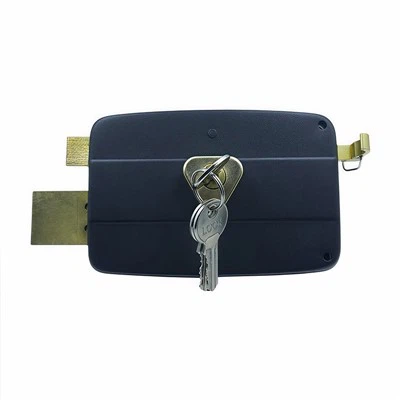
When it comes to privacy latches, one of the most common questions we, as a privacy latch supplier, often encounter is: "What is the maximum weight a privacy latch can hold?" This question is crucial, especially for those who are in the process of selecting the right latch for their doors, cabinets, or other applications. In this blog post, we'll delve into the factors that determine the maximum weight capacity of a privacy latch, and provide you with some insights to help you make an informed decision.
Understanding the Basics of Privacy Latches
Before we discuss the weight capacity, let's first understand what a privacy latch is. A privacy latch is a type of locking mechanism that is typically used on interior doors where privacy is desired, such as bedrooms and bathrooms. It allows the user to lock the door from the inside, while still being able to unlock it from the outside in case of an emergency. Privacy latches come in various designs and materials, each with its own set of features and capabilities.
Factors Affecting the Maximum Weight Capacity
The maximum weight a privacy latch can hold is not a fixed number and can vary depending on several factors. Here are some of the key factors that influence the weight capacity:
Material and Construction
The material used in the construction of the privacy latch plays a significant role in determining its weight capacity. Latches made from high - quality materials such as stainless steel or brass are generally stronger and can withstand more weight compared to those made from plastic or low - grade metals. For example, a stainless - steel privacy latch has excellent corrosion resistance and high tensile strength, which allows it to support heavier loads without bending or breaking.
Design and Mechanism
The design of the latch mechanism also affects its weight - bearing capacity. Some latches have a simple spring - loaded design, while others may have a more complex locking mechanism. A well - designed latch with a robust locking mechanism is better able to distribute the weight evenly and hold up under pressure. For instance, a latch with a double - bolt design provides more stability and can handle greater weight than a single - bolt latch.
Installation
Proper installation is crucial for ensuring that a privacy latch can reach its maximum weight capacity. If the latch is not installed correctly, it may not be able to support the weight of the door or the object it is attached to. For example, if the screws used to install the latch are not long enough or are not tightened properly, the latch may become loose over time and fail to hold the weight.
Testing and Certification
To determine the maximum weight capacity of a privacy latch, manufacturers often conduct rigorous testing. These tests involve applying a gradually increasing load to the latch until it fails. The weight at which the latch fails is then recorded as its maximum weight capacity. Some privacy latches may also be certified by independent testing organizations, which provide an additional level of assurance regarding their performance and safety.
Typical Weight Capacities
Based on our experience as a privacy latch supplier, the weight capacity of privacy latches can vary widely. For standard residential interior doors, most privacy latches can hold weights ranging from 20 to 50 pounds. However, for heavier doors or applications where more weight needs to be supported, there are heavy - duty privacy latches available that can hold up to 100 pounds or more.


Applications and Considerations
When choosing a privacy latch, it's important to consider the specific application and the weight of the door or object it will be used with. For example, if you are using a privacy latch on a lightweight interior door, a standard latch with a lower weight capacity may be sufficient. On the other hand, if you are installing a latch on a solid wood door or a large cabinet, you will need a heavy - duty latch with a higher weight capacity.
In addition to weight capacity, other factors such as the frequency of use, the environment in which the latch will be installed (e.g., indoor or outdoor), and the level of security required should also be taken into account. For outdoor applications, you may want to consider a latch that is weather - resistant, such as an Outdoor Lock. If you need a latch that can automatically lock when the door is closed, a Self Locking Door Lock would be a good choice. And for applications where a quick and easy locking mechanism is needed, a Push Lock can be very convenient.
Conclusion
In conclusion, the maximum weight a privacy latch can hold depends on a variety of factors, including the material, design, installation, and testing. As a privacy latch supplier, we understand the importance of providing our customers with accurate information about the weight capacity of our products. By considering all these factors and choosing the right latch for your specific application, you can ensure that your door or cabinet is secure and functional.
If you are in the market for a privacy latch and have questions about weight capacity or any other aspect of our products, we encourage you to contact us. Our team of experts is ready to assist you in selecting the best privacy latch for your needs. Whether you need a latch for a small residential door or a heavy - duty application, we have a wide range of options to choose from. Start a conversation with us today to discuss your requirements and get a quote.
References
- Engineering Principles of Latch Design, Engineering Handbook
- Material Science for Door Hardware, Material Research Journal
- Installation Guide for Privacy Latches, Manufacturer's Manual