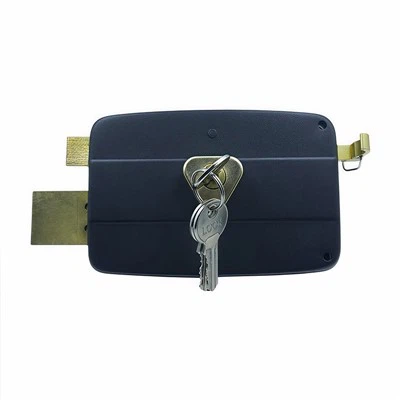
Salt - air corrosion can be a significant concern for garden shed locks, especially in coastal areas. As a garden shed lock supplier, I've witnessed firsthand the detrimental effects of salt - air on locks. In this blog, I'll share some effective strategies to protect garden shed locks from salt - air corrosion.
Understanding Salt - Air Corrosion
Salt - air contains tiny salt particles that are carried by the wind and deposited on surfaces. When these salt particles come into contact with metal, such as the components of a garden shed lock, they initiate a corrosion process. The salt acts as an electrolyte, accelerating the oxidation of the metal. This oxidation leads to the formation of rust, which can weaken the lock, make it difficult to operate, and eventually render it useless.
Choosing the Right Lock Material
One of the first steps in protecting a garden shed lock from salt - air corrosion is to choose the right material. Not all metals are created equal when it comes to corrosion resistance.
Stainless steel is an excellent choice for garden shed locks in salt - air environments. It contains chromium, which forms a passive oxide layer on the surface of the metal. This layer acts as a barrier, preventing oxygen and moisture from reaching the underlying metal and thus inhibiting corrosion. For example, high - grade 316 stainless steel is particularly resistant to salt - water corrosion and is often used in marine applications. You can find a variety of stainless - steel Shed Lock on our website.
Brass is another option. Brass is an alloy of copper and zinc, and it has good corrosion resistance. The copper in brass forms a patina over time, which protects the metal from further corrosion. However, it's important to note that the quality of brass can vary, and some lower - grade brass may still be susceptible to corrosion in harsh salt - air conditions.
Applying Protective Coatings
Even if you choose a corrosion - resistant lock material, applying an additional protective coating can provide an extra layer of defense against salt - air corrosion.
One popular option is a galvanized coating. Galvanization involves applying a layer of zinc to the surface of the metal. Zinc is more reactive than most metals, so when it comes into contact with salt - air, it corrodes first, sacrificing itself to protect the underlying metal. This process is known as sacrificial protection.
Another option is to use a powder - coated finish. Powder coating is a dry finishing process that involves applying a fine powder to the lock and then baking it in an oven. The powder melts and forms a hard, durable coating that can resist scratches, chips, and corrosion. Powder - coated locks are available in a variety of colors, allowing you to choose a finish that matches your garden shed.
Regular Cleaning and Maintenance
Regular cleaning and maintenance are essential for protecting garden shed locks from salt - air corrosion. Salt particles can accumulate on the lock over time, so it's important to remove them before they cause damage.
To clean a garden shed lock, start by using a soft brush or cloth to remove any loose dirt and debris. Then, mix a mild detergent with water and use a sponge or cloth to gently clean the lock. Rinse the lock thoroughly with clean water to remove any soap residue. After cleaning, dry the lock completely to prevent moisture from remaining on the surface.
In addition to regular cleaning, it's also a good idea to lubricate the lock periodically. Lubrication helps to prevent friction and wear, and it can also protect the metal from corrosion. You can use a silicone - based lubricant or a graphite powder to lubricate the lock. Apply the lubricant to the keyway and moving parts of the lock, and then work the key in and out of the lock several times to distribute the lubricant evenly.
Proper Installation
Proper installation of the garden shed lock is crucial for its long - term performance and resistance to corrosion.
Make sure the lock is installed in a location that is protected from direct exposure to salt - air. For example, if possible, install the lock on the side of the shed that is sheltered from the prevailing winds. This can help to reduce the amount of salt particles that come into contact with the lock.
When installing the lock, ensure that all the mounting holes are properly aligned and that the lock is securely fastened. A loose or poorly installed lock can allow moisture to penetrate the components, increasing the risk of corrosion.
Using Protective Covers
Using a protective cover can be an effective way to shield the garden shed lock from salt - air. There are various types of covers available, such as plastic or rubber covers.
A plastic cover can provide a physical barrier between the lock and the salt - air. It can be easily installed and removed, allowing you to access the lock when needed. Some plastic covers are designed to be weather - resistant and UV - stable, ensuring that they last for a long time.
Rubber covers are also a good option. They are flexible and can conform to the shape of the lock, providing a tight seal. Rubber covers can also absorb some of the impact from any debris that may come into contact with the lock, protecting it from damage.


Monitoring and Inspecting
Regularly monitoring and inspecting the garden shed lock is important to catch any signs of corrosion early.
Check the lock for any signs of rust, discoloration, or damage on a monthly basis. If you notice any issues, take action immediately. For minor corrosion, you can try cleaning and treating the affected area with a rust remover and a protective coating. However, if the corrosion is severe, it may be necessary to replace the lock.
Conclusion
Protecting a garden shed lock from salt - air corrosion requires a combination of proper material selection, protective coatings, regular cleaning and maintenance, proper installation, and the use of protective covers. By following these strategies, you can extend the lifespan of your garden shed lock and ensure that it continues to function properly in a salt - air environment.
If you're in the market for high - quality garden shed locks that are resistant to salt - air corrosion, we invite you to explore our range of products. We offer a variety of Push Bar Lock and House Locks in addition to our shed locks. If you have any questions or would like to discuss your specific requirements, please don't hesitate to contact us for a purchase negotiation.
References
- Corrosion of Metals in Marine Environments: A Review. Journal of Corrosion Science and Engineering.
- Handbook of Corrosion Engineering. McGraw - Hill.
- Best Practices for Protecting Metal Structures in Coastal Areas. National Association of Corrosion Engineers.