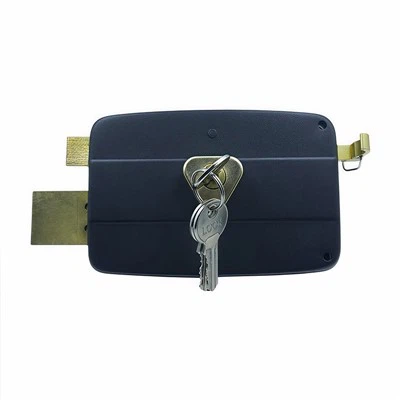
Hey there! As a push pad door locks supplier, I often get asked about how to choose the right size of push pad door lock for your door. It's a crucial decision because getting the size wrong can lead to all sorts of problems, like the lock not fitting properly or not working as it should. In this blog, I'm gonna walk you through the key factors you need to consider to make the right choice.
Understanding Your Door Type
First things first, you need to know what type of door you have. Different doors have different requirements when it comes to lock sizes.
Wooden Doors
Wooden doors are quite common, and they usually have a bit more flexibility in terms of lock installation. But you still need to pick the right size. For wooden doors, you might want to check out our Wooden Door Lock. These locks are designed to fit well with the structure of wooden doors. The thickness of the wooden door matters a lot. Most standard wooden doors are around 1 3/8 inches to 1 3/4 inches thick. If your door is on the thinner side, you'll need a lock that can be adjusted or is specifically made for thinner doors. On the other hand, if it's thicker, you'll need a lock with a longer bolt or latch to ensure a proper fit and secure locking.
Metal Doors
Metal doors are tougher and more secure, but they also require a different approach to lock sizing. They're usually thicker than wooden doors, and they often have a specific way of installing locks. You need to make sure the lock you choose is compatible with the metal door's frame and the way it opens and closes. Some metal doors have pre - drilled holes for locks, so you'll need to match the lock size to those holes.
Glass Doors
Glass doors are a bit tricky. They're not as thick as wooden or metal doors, and they need a lock that can be installed without damaging the glass. There are special push pad locks designed for glass doors. These locks are usually smaller and more lightweight, but they still need to provide enough security. You have to measure the thickness of the glass accurately to find the right lock.
Measuring Your Door
Now, let's talk about measuring your door. This is the most important step in choosing the right size of push pad door lock.
Door Thickness
As I mentioned earlier, door thickness is a key factor. You can use a simple tape measure to find out how thick your door is. Measure the door at several points, especially near the edges and in the middle, to make sure you get an accurate reading. If your door has a non - standard thickness, don't worry. There are adjustable locks available that can be customized to fit your door.
Backset
Backset is the distance from the edge of the door to the center of the hole where the lock will be installed. The most common backset sizes are 2 3/8 inches and 2 3/4 inches. You need to measure this accurately because if the backset is wrong, the lock won't fit properly. To measure the backset, place the end of the tape measure at the edge of the door and measure to the center of the hole.
Door Height and Width
While the height and width of the door don't directly affect the lock size, they can give you an idea of the overall security needs of your door. For example, a wider door might need a stronger lock to prevent it from being forced open. Also, if your door is very tall, you might want to consider a lock that can be easily reached from the ground or a step - ladder, depending on how you use the door.
Considering the Lock Features
The features of the push pad door lock also play a role in determining the right size.
Bolt or Latch Length
The length of the bolt or latch is important for security. A longer bolt or latch can provide more protection because it goes deeper into the door frame. However, you need to make sure it fits properly within the door and the frame. If it's too long, it might not retract or extend correctly, and if it's too short, it won't provide enough security.
Keypad Size
The size of the keypad on the push pad lock can also be a factor. If you have a lot of people using the lock, like in a commercial setting or a large family home, you might want a keypad with larger buttons for easier use. On the other hand, if space is limited, a smaller keypad might be a better option.
Locking Mechanism
There are different types of locking mechanisms, such as deadbolts and spring - loaded latches. Each type has its own size requirements. Deadbolts are generally more secure, but they might be larger and require more space for installation. Spring - loaded latches are smaller and more convenient for everyday use, but they might not be as secure as deadbolts.
Special Considerations for Different Applications
Residential Use
For your home, you want a lock that's easy to use and provides enough security. You might not need the most heavy - duty lock, but it should still be reliable. If you have kids or elderly people in the house, a lock with a simple keypad and easy - to - understand instructions is a good choice. You can also consider a lock with additional features like auto - locking or a backup key option.


Commercial Use
In a commercial setting, like an office or a store, security is of utmost importance. You'll need a larger, more robust lock that can withstand more wear and tear. Hotel Locks are a great example of locks designed for commercial use. They often have advanced security features and are built to last. You might also need a lock that can be integrated with an access control system, which can add to the complexity of choosing the right size.
Industrial Use
Industrial doors are usually very large and heavy. They require a lock that can handle the weight and stress. These locks are often much larger and more powerful than residential or commercial locks. You need to make sure the lock can be installed properly on the industrial door's frame and that it can provide a high level of security.
Other Types of Locks to Consider
If you're still not sure if a push pad lock is the right choice for you, there are other types of locks you can look into. For example, Quarter Turn Lock is another option. These locks are easy to use and can be a good alternative depending on your door type and security needs. They come in different sizes, so you'll still need to measure your door and consider the same factors as with push pad locks.
Wrapping It Up
Choosing the right size of push pad door lock for your door is a process that requires careful consideration. You need to understand your door type, measure your door accurately, consider the lock features, and think about the specific application. By taking these steps, you can ensure that you get a lock that fits your door perfectly and provides the security you need.
If you're still confused or have any questions about choosing the right push pad door lock size, don't hesitate to reach out. We're here to help you make the best decision for your door. Whether you're a homeowner, a business owner, or an industrial operator, we have a wide range of push pad door locks to suit your needs. Contact us today to start the procurement process and get a lock that will keep your property safe and secure.
References
- "Door Lock Installation Guide" - General hardware industry publication
- "Security Locks for Different Door Types" - Journal of Building Security