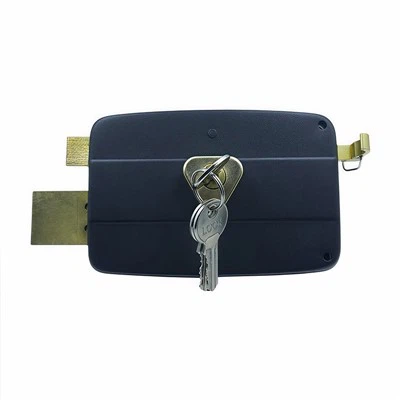
In the modern hospitality industry, the security of hotel rooms is a top priority for both hotel owners and guests. Hotel locks play a crucial role in ensuring this security. However, with the rapid advancement of technology, a question that often arises is: Can hotel locks be hacked? As a professional Hotel Locks supplier, I'd like to delve into this topic and provide some insights.
The Evolution of Hotel Locks
Hotel locks have come a long way from the traditional key - and - lock systems. In the past, mechanical keys were the norm. These keys were simple pieces of metal that could be duplicated relatively easily if lost or stolen. Hotel staff had to manage a large number of keys, which was not only cumbersome but also posed a security risk.
Then came the era of magnetic stripe card locks. These locks used magnetic stripes on cards to store access information. They were an improvement over mechanical keys as they allowed for easier key management and could be programmed to expire after a certain period. However, magnetic stripe cards were vulnerable to demagnetization and could be easily copied using simple equipment.
Today, most hotels use electronic key card systems, such as RFID (Radio - Frequency Identification) and NFC (Near - Field Communication) locks. These systems use radio waves to communicate between the key card and the lock. They offer enhanced security features, such as encryption and unique access codes for each guest. Some high - end hotel locks even integrate biometric technology, such as fingerprint or facial recognition, to provide an extra layer of security.


The Hacking Threat
Despite the advancements in hotel lock technology, the threat of hacking still exists. Hackers are constantly looking for vulnerabilities in electronic systems to gain unauthorized access. There have been several reported cases where hotel locks were hacked.
One common method of hacking is through the use of skimming devices. These devices can be used to read the information stored on magnetic stripe cards or RFID tags. Once the information is obtained, hackers can create duplicate cards and gain access to hotel rooms. In some cases, hackers have also exploited software vulnerabilities in the lock systems. If the lock's software is not properly updated or secured, hackers can use malware to bypass the access controls.
Another potential threat is the use of brute - force attacks. In a brute - force attack, hackers try all possible combinations of access codes until they find the correct one. While modern hotel locks are designed to prevent this by locking out after a certain number of failed attempts, determined hackers may still find ways around these safeguards.
Security Measures in Hotel Locks
As a Hotel Locks supplier, we are well - aware of these threats and have implemented several security measures to protect our products.
Encryption
Encryption is one of the most important security features in modern hotel locks. We use advanced encryption algorithms to protect the data transmitted between the key card and the lock. This ensures that even if the data is intercepted, it cannot be easily decoded by hackers.
Regular Software Updates
We also provide regular software updates for our hotel locks. These updates not only add new features but also patch any security vulnerabilities that may be discovered. Hotel owners are encouraged to install these updates promptly to keep their lock systems secure.
Physical Security
In addition to electronic security measures, we also focus on physical security. Our locks are made of high - quality materials that are resistant to tampering and forced entry. They are designed to withstand physical attacks, such as drilling or prying.
Access Control Management
We offer comprehensive access control management systems that allow hotel staff to monitor and manage guest access. Hotel managers can set different levels of access for different types of guests and staff. They can also track who has accessed a room and at what time, which can be useful for security and auditing purposes.
Comparing Different Types of Hotel Locks
Let's take a closer look at some of the different types of hotel locks we offer and their security features.
Hotel Locks
Our Hotel Locks are designed to provide high - level security and convenience. They use advanced RFID technology with strong encryption to ensure that only authorized guests can access the rooms. The locks are also equipped with anti - tampering sensors that will trigger an alarm if someone tries to force open the lock.
Self Locking Door Lock
Self Locking Door Locks are a popular choice for hotels. These locks automatically lock when the door is closed, eliminating the risk of guests forgetting to lock their rooms. They are also designed with a deadbolt mechanism that provides additional security against forced entry.
Push Door Lock
Push Door Locks are easy to use and provide a high level of security. They can be operated with a simple push, making them convenient for guests. These locks also have a built - in anti - panic function, which allows guests to quickly exit the room in case of an emergency.
Conclusion and Call to Action
While the threat of hacking exists, modern hotel locks are designed with multiple security features to protect against unauthorized access. As a Hotel Locks supplier, we are committed to providing the highest level of security for our customers.
If you are a hotel owner or manager looking to upgrade your lock systems, we invite you to contact us for a consultation. We can help you choose the right hotel locks for your needs and provide you with the support and maintenance services you require. Our team of experts is always ready to assist you in ensuring the security of your hotel guests.
References
- "Security in Hotel Lock Systems: A Comprehensive Guide" - Journal of Hospitality Security
- "The Future of Hotel Lock Technology" - International Journal of Hotel Management
- "Hacking Threats in Electronic Systems" - Cybersecurity Research Institute