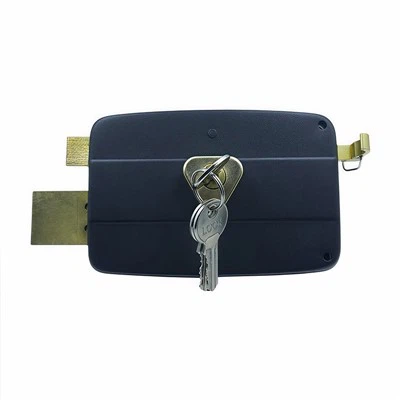
Are small door locks radiation-resistant?
As a supplier of small door locks, I often encounter various inquiries from customers. One rather unique question that has come up recently is whether small door locks are radiation-resistant. At first glance, this might seem like an odd query, but in today's world filled with concerns about environmental factors and safety, it's a question worth exploring in depth.
To begin with, let's understand what radiation is. Radiation refers to the emission of energy as electromagnetic waves or as moving subatomic particles, especially high - energy particles that cause ionization. There are different types of radiation, such as ionizing radiation (e.g., X - rays, gamma rays) and non - ionizing radiation (e.g., radio waves, visible light).
Most small door locks are typically made of materials like brass, stainless steel, zinc alloy, or plastic. These materials have their own physical and chemical properties. For example, brass is an alloy of copper and zinc. It is known for its durability, corrosion resistance, and aesthetic appeal. Stainless steel, on the other hand, is highly resistant to rust and has good strength. Zinc alloy is a lightweight and cost - effective option, while plastic is often used for its low cost and ease of molding.
When it comes to radiation resistance, we need to analyze each type of material separately.
Brass: Copper, one of the main components of brass, has a certain ability to absorb and scatter electromagnetic radiation. However, its effectiveness against ionizing radiation is limited. Copper has a relatively low atomic number, which means it is not as efficient as heavier elements in blocking high - energy ionizing radiation such as gamma rays. But for non - ionizing radiation, like radio waves, brass can act as a partial shield. The free electrons in the metal can interact with the electromagnetic fields of the radio waves, causing some of the energy to be reflected or absorbed.
Stainless steel: Similar to brass, stainless steel contains iron, chromium, and nickel. These metals have better conductivity compared to many other materials. In the case of non - ionizing radiation, the conductive nature of stainless steel allows it to create an electromagnetic shielding effect. When an electromagnetic wave encounters a stainless - steel surface, the free electrons in the metal move in response to the changing electric field of the wave. This movement of electrons generates an opposing electric field that can cancel out or reduce the incident electromagnetic field. However, for ionizing radiation, stainless steel is not a highly effective shield. High - energy ionizing particles can penetrate through stainless - steel layers relatively easily, especially if the thickness of the steel is not sufficient.
Zinc alloy: Zinc has a relatively low atomic number compared to some other metals. This makes it less effective in blocking ionizing radiation. Zinc alloy locks are mainly designed for their mechanical properties such as strength and ease of manufacturing. They are not engineered to provide significant radiation - shielding capabilities. For non - ionizing radiation, the conductive properties of zinc alloy are also limited compared to pure metals like copper or stainless steel.
Plastic: Plastic is an insulator, which means it does not conduct electricity. As a result, it has very little ability to interact with electromagnetic fields. For non - ionizing radiation, plastic is essentially transparent. It allows radio waves, microwaves, and other forms of non - ionizing radiation to pass through without significant absorption or reflection. And for ionizing radiation, plastic is also a poor shield. The light atoms in plastic materials are easily penetrated by high - energy ionizing particles.
In general, small door locks are not designed to be radiation - resistant. Their primary functions are to provide security, prevent unauthorized access, and ensure the proper functioning of doors. The materials used in small door locks are chosen based on factors such as cost, durability, and aesthetic appearance, rather than radiation - shielding capabilities.
However, in some specialized applications where radiation protection is required, there are alternative solutions. For example, in nuclear power plants or medical facilities where ionizing radiation is present, special lead - lined doors and shielding materials are used. These materials have high atomic numbers and can effectively block ionizing radiation.
Now, let's talk about the different types of small door locks that we offer. We have a wide range of products, including the Universal Door Lock, Quarter Turn Lock, and Privacy Lock.


The Universal Door Lock is designed to be versatile and can be used in various types of doors. It is made of high - quality brass, which provides good durability and corrosion resistance. The lock mechanism is reliable, ensuring that your door is securely locked.
The Quarter Turn Lock is a popular choice for many customers. It offers quick and easy locking and unlocking with a simple quarter - turn motion. This lock is available in different finishes and materials, including stainless steel and zinc alloy, to meet different aesthetic and functional requirements.
The Privacy Lock is specifically designed for areas where privacy is important, such as bathrooms and bedrooms. It has a locking mechanism that can be easily operated from the inside, providing a sense of security and privacy.
Although these locks are not radiation - resistant, they are carefully crafted to meet the highest standards of quality and security. We understand that our customers have different needs, and we strive to provide the best products and services.
If you are in the market for small door locks, whether for residential, commercial, or industrial use, we invite you to contact us for a purchase and negotiation. We are more than happy to discuss your specific requirements and provide you with the most suitable solutions.
References
- "Introduction to Electromagnetic Fields and Waves" by Constantine A. Balanis
- "Radiation Protection in Medical Radiology" by Eric J. Hall
- "Materials Science and Engineering: An Introduction" by William D. Callister Jr. and David G. Rethwisch