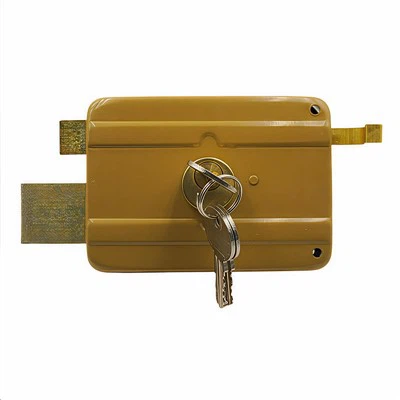
As a supplier of push pad door locks, I often get asked a bunch of questions from customers. One question that pops up quite a bit is, "Are push pad door locks noisy when unlocking?" It's a valid concern, especially when you think about where these locks are used.
Let's first understand what push pad door locks are. These locks are super convenient. Instead of fumbling with keys, you just enter a code on the keypad, and the door unlocks. They're used in all sorts of places - homes, offices, hotels, and more.


Now, let's dig into the noise factor. When it comes to unlocking, the noise level of push pad door locks can vary. There are a few things that can influence how much noise they make.
Factors Affecting the Noise of Push Pad Door Locks
1. Lock Mechanism
The type of lock mechanism inside the push pad door lock plays a huge role. Some locks use traditional mechanical parts like bolts and gears. When you enter the code and the lock unlocks, these parts move, and that can create noise. For example, if the bolts are made of metal and they slide against the housing of the lock, it can produce a clanking sound.
On the other hand, there are some high - tech push pad door locks that use electronic solenoids. These solenoids are designed to move quickly and quietly. They work by using an electromagnetic field to unlock the door. Since there are fewer moving mechanical parts, the noise level is generally lower.
2. Quality of the Lock
The quality of the push pad door lock also affects the noise. Cheaper locks might not be made with the best materials or have a well - designed mechanism. For instance, the plastic parts in a low - quality lock might be brittle and make a cracking or clicking sound when the lock is unlocked.
In contrast, high - end push pad door locks are often made with precision - engineered components. The metal parts are smooth, and the assembly is tight. This means that when you unlock the door, there's less rattling or clanking.
3. Installation
How the push pad door lock is installed can make a big difference in the noise it produces. If the lock isn't installed correctly, it can cause extra vibrations and noise. For example, if the lock is loose on the door, when you enter the code and the unlocking mechanism activates, the whole lock might shake, creating a rattling sound.
A proper installation involves making sure the lock is securely attached to the door and that all the parts are aligned correctly. This helps to minimize any unnecessary noise.
Noise Levels in Different Settings
1. Homes
In a home setting, noise can be a bit of a concern, especially if you have a baby sleeping or if you like a quiet environment. If you're using a push pad door lock on the front door, you don't want it to wake everyone up when you come home late at night.
For homes, it's a good idea to choose a push pad door lock with a low - noise level. You might want to look for locks with electronic solenoid mechanisms. These locks are usually quieter and can provide a more peaceful entry.
2. Offices
In an office, the noise from a push pad door lock might not be as big of a deal. There are usually other background noises like the hum of computers, people talking, and printers running. However, if you have a quiet office area, like a meeting room or a private office, a noisy lock can be a distraction.
For offices, you can choose a lock based on the specific needs of the area. If it's a high - traffic area, you might prioritize durability over noise level. But for quiet areas, a quieter lock would be more suitable.
3. Hotels
Hotels are a bit of a special case. Guests expect a certain level of comfort and quietness. A noisy push pad door lock can really ruin the guest experience. That's why many hotels are turning to high - quality, quiet push pad door locks. You can check out some Hotel Locks that are designed to be quiet and reliable.
Comparing Push Pad Door Locks with Other Types of Locks
1. Keyed Locks
Keyed locks can be noisy too. When you insert the key into the lock and turn it, there can be a lot of jiggling and clicking sounds. And if the lock is old or worn out, the noise can be even worse.
Compared to keyed locks, push pad door locks can be quieter because there's no need to insert and turn a key. You just enter a code, and the door unlocks.
2. Push Bar Locks
Push Bar Locks are commonly used on emergency exit doors. These locks are designed to be easy to open in case of an emergency. They can make a fair amount of noise when the bar is pushed and the lock releases.
Push pad door locks, on the other hand, are more controlled in terms of noise. You can enter the code quietly, and the unlocking process can be much less disruptive.
3. Outdoor Locks
Outdoor Locks are exposed to the elements, and this can affect their noise level. Rust and dirt can make the lock mechanism stiffer, which can lead to more noise when unlocking.
Push pad door locks can be a good option for outdoor use as well. Many of them are designed to be weather - resistant, and if you choose a high - quality one, it can operate quietly even in outdoor conditions.
Tips to Reduce Noise from Push Pad Door Locks
If you already have a push pad door lock that's a bit noisy, there are a few things you can do to reduce the noise.
- Lubrication: If the lock has moving mechanical parts, like bolts, you can apply a small amount of lubricant. This can help to reduce friction and make the movement smoother and quieter.
- Tighten the Lock: Check if the lock is loose on the door. If it is, tighten the screws to make sure it's securely attached. This can reduce any rattling or shaking.
- Replace Worn Parts: If the lock has worn - out parts, like a cracked plastic cover or a loose bolt, consider replacing them. This can improve the overall performance and reduce noise.
In conclusion, whether push pad door locks are noisy when unlocking depends on several factors. But with the right choice of lock, proper installation, and some maintenance, you can have a quiet and reliable push pad door lock.
If you're in the market for push pad door locks or have any questions about noise levels or other features, feel free to reach out. We're here to help you find the perfect lock for your needs. Whether it's for your home, office, or hotel, we've got a wide range of options to choose from. Let's start a conversation and see how we can meet your requirements.
References
- General knowledge about door locks from industry experience.
- Product specifications and research on different types of push pad door locks.